
For many adolescents and young adults, pilonidal disease is something they quietly endure — often for months — before ever telling a parent or seeking medical care. Pain, drainage, and embarrassment can keep teens suffering in silence.
At Brown Health Medical Group, the PEACH Program is changing that.
Led in part by Andrew McCarthy, CPNP, with the Division of Pediatric Surgery, the program combines minimally invasive treatment, patient education, and practical support to help young patients recover quickly — and confidently.
Understanding Pilonidal Disease
Pilonidal disease occurs when hair or other foreign material becomes embedded beneath the skin, most commonly in the gluteal cleft (the area between the buttocks). The body reacts much like it would to a splinter — triggering inflammation and sometimes forming a fluid-filled cyst beneath the skin.
For teens and young adults — the age group most commonly affected — this can mean:
-
Chronic pain
-
Ongoing drainage
-
Acute infections that may require drainage procedures
“There tends to be an element of hormonal release associated with early adolescence into young adulthood,” McCarthy explains. Unfortunately, many teens try to manage symptoms on their own before speaking up.
Parents often say the same thing during consultation: “I would have brought them in sooner had I known.”
The PEACH Program aims to close that gap.
A Minimally Invasive Approach
One of the biggest advancements in the program is the shift toward minimally invasive treatment options — specifically, a technique called the pit picking procedure.
Rather than removing large amounts of tissue, pit picking involves a small circular excision around areas of inflammation. The benefits are significant:
-
Can often be performed in the clinic
-
Preserves healthy tissue
-
Simplifies wound care
-
Minimizes downtime
-
Helps patients return quickly to school, sports, and daily life
For teens eager to get back to their routines, this matters. Reduced restrictions and easier recovery improve both physical healing and patient buy-in.
Early Intervention Through Education
A key goal of the PEACH Program is identifying patients at risk of infection before complications escalate.
By raising awareness and educating families about early symptoms, the team helps patients access care sooner — preventing more serious issues and more invasive treatments.
Just as important is empowering teens to take ownership of their care. McCarthy emphasizes honest, age-appropriate conversations that respect privacy while encouraging responsibility. Patients are guided to participate in wound care and symptom management, setting them up for long-term success.
Practical Support That Reduces Stigma
Pilonidal disease can feel isolating and embarrassing — especially for teens. The PEACH Program addresses that head-on.
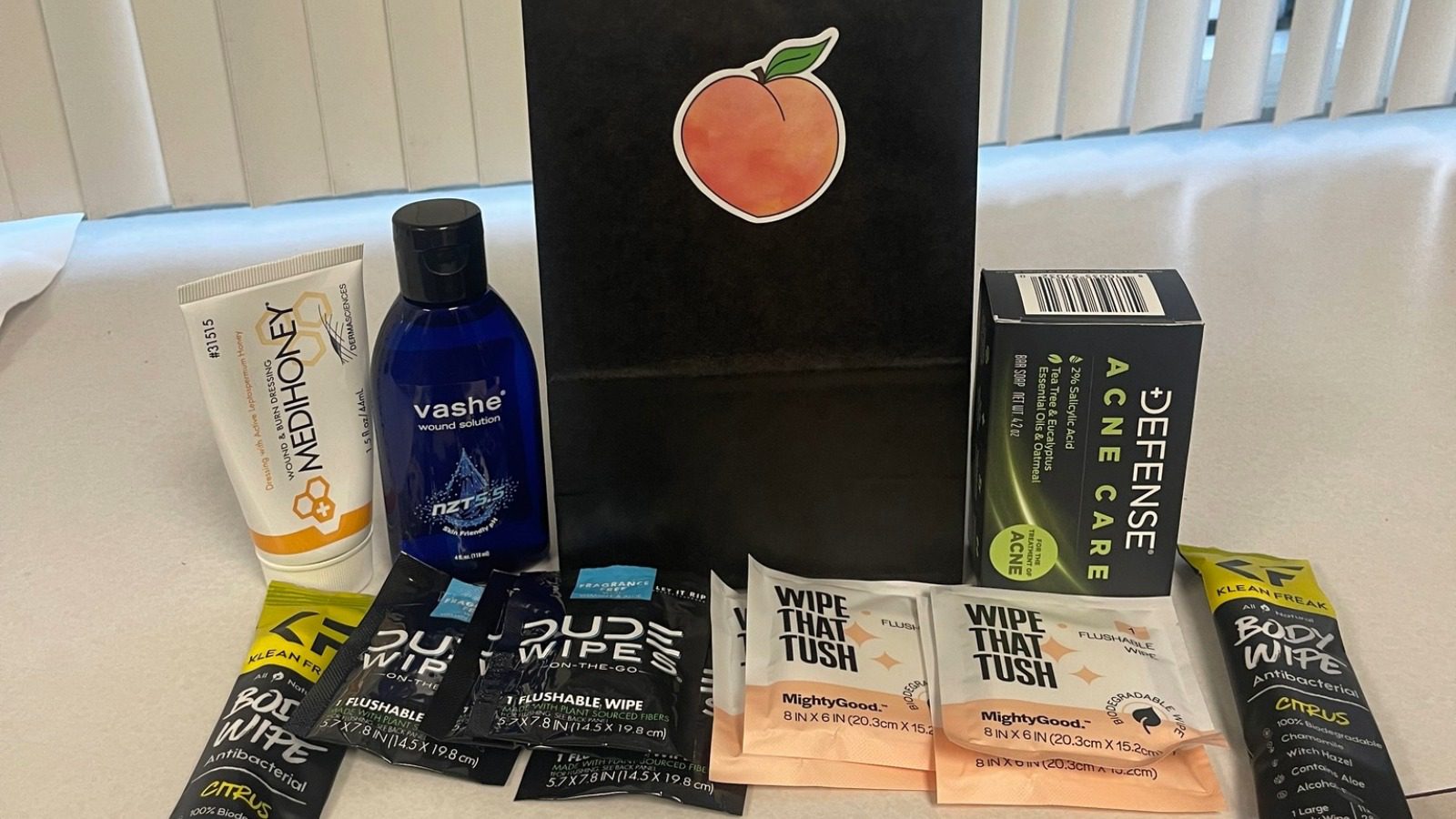
Every patient who undergoes a procedure receives a wound care package to take home. These supplies — funded through donations — include hygiene products designed to make recovery easier and more comfortable.
Toilet paper can be harsh on healing tissue, especially when drainage is present. Providing appropriate alternatives not only improves comfort but also reduces stigma. By normalizing care and offering discreet, practical solutions, the program helps patients feel supported rather than singled out.
The name “PEACH” itself reflects that approachable, teen-friendly mindset — using a bit of lightness to address a sensitive issue in a way that resonates with young patients.
A Program Built on Compassion and Confidence
At its core, the PEACH Program is about more than treating pilonidal disease. It’s about:
-
Breaking the silence around a common but misunderstood condition
-
Offering modern, minimally invasive treatment
-
Empowering teens to participate in their own care
-
Supporting families with education and resources
By combining surgical expertise with thoughtful, patient-centered care, Brown Health Medical Group is helping adolescents move past embarrassment — and back to living their lives with confidence.
If your child is experiencing symptoms such as pain, swelling, or drainage in the lower back area, early evaluation can make a meaningful difference. The team at Brown Health Medical Group’s Division of Pediatric Surgery is here to help.


